 Save Pin
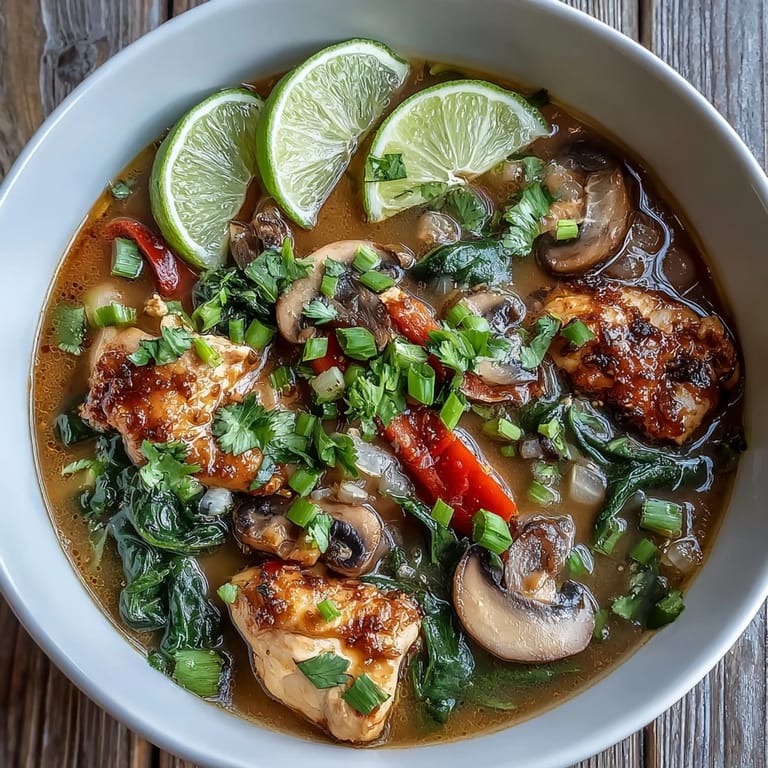
 There's something almost magical about the moment you pour coconut milk into a pot of fragrant curry paste and watch it transform into silk. My friend Marco taught me this soup one rainy afternoon when he showed up at my kitchen with a bag of Thai ingredients and the confidence of someone who'd eaten this in Bangkok. He moved through my small kitchen like he owned it, bruising lemongrass with the side of his knife, and suddenly my whole apartment smelled like a market I'd never been to. That day, I learned that good food isn't about fancy techniques or expensive equipment, it's about honoring where flavors come from and cooking with intention.
I made this soup for my sister the night before she moved for work, and we sat at the kitchen counter with steaming bowls while she talked about her nervous excitement. She went back for seconds and thirds, and we didn't talk much because we were too busy eating and occasionally looking at each other over the steam rising from our bowls. That's when I realized this wasn't just a recipe I'd learned, it was something I could give to people I cared about.
Ingredients
- Boneless, skinless chicken breast or thighs (400 g): Thighs stay more tender during cooking, but breasts work fine if that's what you have on hand, just don't overcook them.
- Mushrooms, sliced (200 g): Shiitake adds earthiness that feels luxurious, but button mushrooms are perfectly honest and absorb the curry beautifully.
- Carrots, julienned (2 medium): Cut them thin enough to cook through in the time the chicken needs, and they'll add natural sweetness without needing extra sugar.
- Red bell pepper, thinly sliced (1 small): This brightens the broth with color and a gentle sweetness that balances the heat from the curry.
- Baby spinach or bok choy (100 g): Optional but worth including for green freshness and because it wilts into the broth at the last moment like it was always meant to be there.
- Spring onions, thinly sliced (2): Save these for garnish at the end to keep their sharp bite intact and their color vibrant.
- Fresh ginger, grated (1 tablespoon): Freshly grated makes all the difference, and your knuckles will thank you if you use the flat side of your knife to press it before grating.
- Garlic, minced (3 cloves): Don't skip this, and don't use jarred garlic if you can help it, the fresh stuff is the backbone of this soup.
- Lemongrass, bruised (2 stalks): Bruise it by bashing it gently with the side of your knife to release the oils, then remove it before serving because it's woody and you don't want to bite into it.
- Kaffir lime leaves (4): These add a citrusy depth that lime juice alone can't quite reach, but if you can't find them, just use more lime juice and a bit more zest.
- Red curry paste (2 tablespoons): This is your starting point for heat and flavor, but adjust it to your comfort level because curry pastes vary wildly in spice level.
- Coconut milk, full fat or light (800 ml): Full fat makes it richer and more forgiving, light coconut milk works but the soup will taste leaner.
- Chicken broth (500 ml): Use something you'd actually drink on its own, because it matters more than you think.
- Fish sauce (1 tablespoon): This seems mysterious until you taste it, then you understand it's the umami backbone that makes everything taste more like itself.
- Brown sugar (1 tablespoon): Just enough to round out the flavors without making it sweet, though you can adjust this after tasting.
- Lime juice (from 1 lime): Fresh is non-negotiable here, bottled lime juice tastes like regret.
- Fresh cilantro, chopped: This is your final flourish that makes people pause before their first spoonful to appreciate the aroma.
- Fresh red chili, sliced (optional): Add this if you want heat that builds rather than hits, and leave the seeds in if you're feeling brave.
- Lime wedges: Serve these on the side so everyone can add brightness to their bowl exactly as they want it.
Tired of Takeout? 🥡
Get 10 meals you can make faster than delivery arrives. Seriously.
One email. No spam. Unsubscribe anytime.
Instructions
- Start with your aromatics:
- Heat your pot over medium heat with a splash of oil, then add the ginger, garlic, and lemongrass and let them sizzle for about a minute. You'll smell it before you see anything change, and that's how you know it's working.
- Build your flavor base:
- Stir in the red curry paste and cook it for another minute, letting it caramelize slightly and release all its fragrant oils into the pot. This step matters more than it seems.
- Add the chicken:
- Put in your sliced chicken and stir it around for two or three minutes so every piece gets coated with the curry paste and begins to color. Don't walk away, this is the moment where you're actually cooking and not just assembling.
- Pour in the liquids:
- Add both the coconut milk and chicken broth, along with the kaffir lime leaves if you're using them, and stir everything together so the curry paste dissolves into the broth. It'll look separated at first, then gradually come together into something silky.
- Add your vegetables:
- Toss in the carrots, mushrooms, and bell pepper and bring everything to a gentle simmer, not a rolling boil. Let them cook for about ten to twelve minutes until the chicken is cooked through and the vegetables are tender but not mushy.
- Season and taste:
- Add the fish sauce, brown sugar, and lime juice, then taste and adjust because this is your moment to make it exactly how you want it. Everyone's palate is different, so be brave about adjusting.
- Add greens if using:
- If you're adding spinach or bok choy, stir it in now and let it wilt for just a minute, which takes about the time it takes you to read this sentence. Don't overcook it.
- Remove the woody bits:
- Fish out the lemongrass stalks and kaffir lime leaves with a spoon or tongs before you serve, because nobody wants to bite into those. It's a small detail but it matters.
- Serve and garnish:
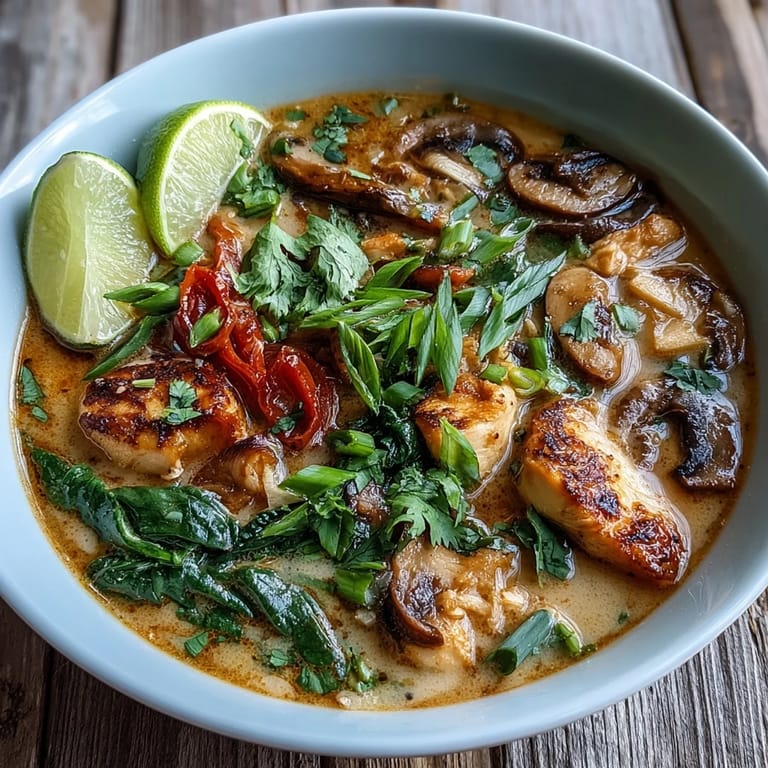
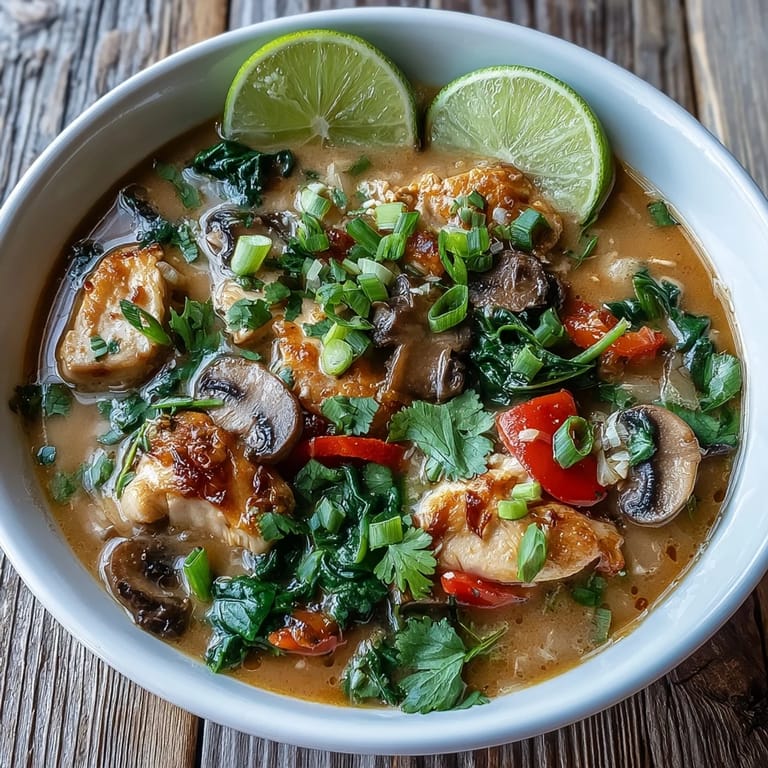
- Ladle the soup into bowls and scatter the spring onions, cilantro, and fresh chili on top, then set a lime wedge on the side. Let people adjust it to their taste.
 Save Pin
 My colleague brought this soup to a potluck during a stressful project week, and I watched people's shoulders literally drop when they tasted it. That's when it hit me that food isn't just about nutrition or even taste, it's about giving people permission to slow down for ten minutes and just be.
How to Make This Your Own
This soup is genuinely flexible, which is part of why I keep making it. Swap the chicken for shrimp if you want something lighter, or use tofu if you're cooking for vegetarians and just switch to vegetable broth and soy sauce instead of fish sauce. Some nights I add baby corn or snap peas, other times I use whatever vegetables were hiding in my crisper drawer and it works just fine. The curry paste is the main character here, so everything else is just supporting players, which means you can rearrange them without losing the soul of the dish.
Serving Suggestions That Actually Work
This soup is complete on its own, but I've learned that serving it with jasmine rice or rice noodles turns it into something more substantial when people are extra hungry. A crisp white wine like Riesling or Gewürztraminer sits next to a bowl of this beautifully without competing with the flavors. The cool wine cuts through the richness of the coconut in a way that makes you want another spoonful of soup, then another sip of wine, and before you know it you're contentedly full.
The Little Things That Make It Better
I've made this soup enough times now to notice that the small details matter more than the complicated ones. The quality of your ginger and garlic matters because they're so prominent, and using a proper ladle instead of just pouring makes the presentation feel intentional. Heat your bowls before serving if you have time, because it keeps the soup hotter longer and shows you actually care about the experience, not just the food.
- If you can't find kaffir lime leaves, just add extra lime zest and juice because the goal is brightness and citrus, and that can come from different places.
- Keep the red curry paste measured out before you start cooking so you're not fumbling with the jar while everything's sizzling, it's a small thing that changes the vibe of cooking.
- Taste the broth before you add the chicken and vegetables so you know what you're working with, and adjust the curry paste then if you need more or less heat.
 Save Pin
 This soup is the kind of recipe that becomes a regular in your rotation because it's reliable, it tastes good, and it makes people happy. Make it, share it, adjust it until it's yours, and watch how something so simple becomes something people actually remember.
Recipe Questions & Answers
- → Can I make this soup vegetarian?
Absolutely. Swap chicken for extra-firm tofu and use vegetable broth instead of chicken broth. Replace fish sauce with soy sauce or tamari to maintain the savory depth.
- → How spicy is this soup?
The spice level depends on your red curry paste. Start with 2 tablespoons for moderate heat, or reduce to 1 tablespoon for a milder version. You can always add more paste later.
- → Can I freeze leftovers?
Yes, this soup freezes well for up to 3 months. Cool completely before storing in airtight containers. Thaw overnight in the refrigerator and reheat gently on the stove.
- → What can I serve with this soup?
Jasmine rice or rice noodles make excellent additions for a heartier meal. A crisp white wine like Riesling or Gewürztraminer pairs beautifully with the aromatic spices.
- → Can I use light coconut milk?
Yes, light coconut milk works well and reduces the overall fat content. Full-fat coconut milk creates a richer, creamier broth, but both versions deliver delicious results.
- → How do I store fresh lemongrass and kaffir lime leaves?
Wrap lemongrass stalks in damp paper towels and store in the refrigerator for up to 2 weeks. Kaffir lime leaves can be frozen in a sealed bag for several months.