 Save Pin
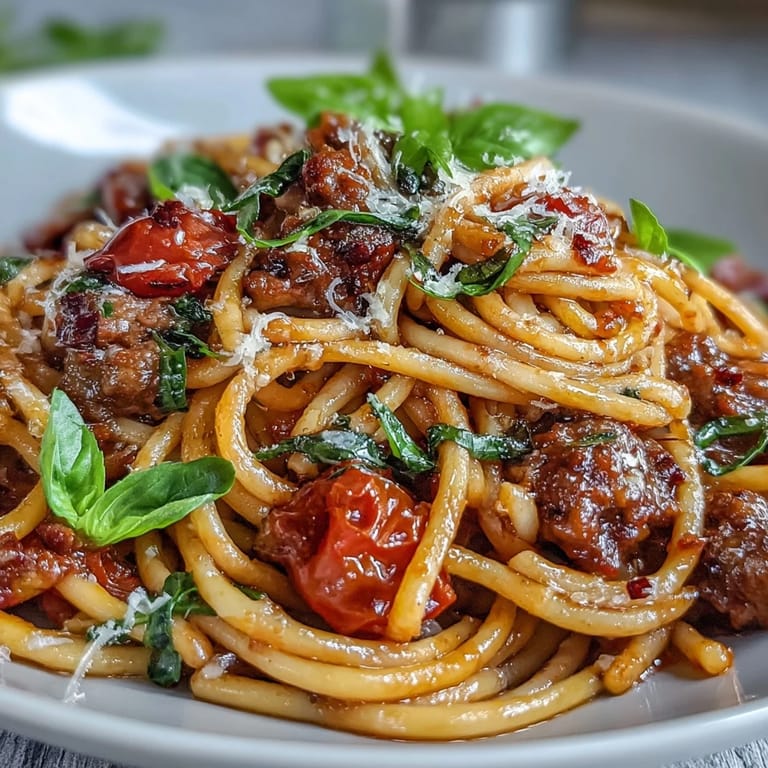
 The name caught my attention at a potluck where someone brought a skillet still crackling from the stove. I expected pad kee mao, but tasted Chianti and Parmesan instead. The host laughed and said she'd been experimenting with wine-soaked pasta after a trip to Tuscany, and somehow this fusion was born. I went home that night determined to recreate it, and it's been my go-to for impressing dinner guests ever since.
I made this for my brother's birthday last spring, doubling the recipe and using both sausage and shrimp because he couldn't decide. The kitchen filled with garlic and wine steam, and he stood by the stove with a glass of Chianti, taste-testing every stage. By the time we sat down, he'd declared it better than any restaurant version he'd tried. Now he requests it every year, and I've learned to keep extra basil on hand because he piles it on like confetti.
Ingredients
- Spaghetti or linguine: The long, slender shape is essential for catching the sauce, and I've found that slightly undercooking it ensures it finishes perfectly in the skillet.
- Extra-virgin olive oil: Use a good one, it's the base of your sauce and you'll taste it in every bite.
- Yellow onion: Thin slices soften quickly and almost melt into the sauce, adding a subtle sweetness that balances the wine's acidity.
- Garlic cloves: Fresh is non-negotiable here, the jarred stuff just won't give you that fragrant punch when it hits the hot oil.
- Red pepper flakes: Start with a teaspoon and adjust, because the heat builds as the sauce reduces and you can always add more at the table.
- Italian sausage or shrimp: Sausage brings a savory, fennel-laced richness, while shrimp keeps it lighter and cooks in minutes.
- Cherry tomatoes: Halved, they burst and release sweet juices that form the backbone of the sauce.
- Tomato paste: Just two tablespoons deepen the color and add a concentrated tomato flavor that ties everything together.
- Dry red wine: Chianti or Sangiovese are my favorites, their bright acidity and berry notes make the sauce sing.
- Soy sauce: This is the secret umami layer that makes people ask what's in here, it's unexpected but essential.
- Worcestershire sauce: Adds a tangy, slightly sweet depth that complements the wine beautifully.
- Balsamic vinegar: A single tablespoon brightens the whole dish and balances the richness.
- Fresh basil: Torn leaves stirred in at the end keep their color and perfume, and they're what makes this dish feel alive.
- Fresh parsley: A handful of chopped parsley adds a grassy freshness that cuts through the richness.
- Parmesan cheese: Grated and stirred in off the heat, it melts into a silky, savory coating.
- Salt and black pepper: Taste as you go, the soy and Parmesan are salty, so you may need less than you think.
Tired of Takeout? 🥡
Get 10 meals you can make faster than delivery arrives. Seriously.
One email. No spam. Unsubscribe anytime.
Instructions
- Boil the pasta:
- Bring a large pot of salted water to a rolling boil and cook your pasta until just al dente, about a minute less than the package suggests. Reserve a full cup of that starchy pasta water before draining, it's your secret weapon for a glossy sauce.
- Heat the skillet:
- While the pasta bubbles away, heat a large skillet over medium-high until a drop of water sizzles on contact. Swirl in the olive oil and let it shimmer.
- Soften the aromatics:
- Toss in the sliced onion and let it cook for two to three minutes, stirring occasionally, until it starts to turn translucent. Add the garlic and red pepper flakes, stirring for just thirty seconds until the kitchen smells amazing.
- Cook the protein:
- If using sausage, crumble it into the skillet and cook for five to seven minutes, breaking it into bite-sized pieces until browned and cooked through. For shrimp, add them in a single layer and cook two to three minutes per side until they turn pink and opaque.
- Add the tomatoes:
- Stir in the halved cherry tomatoes and tomato paste, cooking for about two minutes while gently mashing some of the tomatoes with your spoon to release their juices. The skillet should look jammy and fragrant.
- Deglaze with wine:
- Pour in the red wine, scraping up all those browned bits stuck to the bottom of the pan. Let it simmer for two to three minutes until the wine reduces by about half and the alcohol smell mellows.
- Season the sauce:
- Stir in the soy sauce, Worcestershire sauce, and balsamic vinegar, mixing everything together. Taste and adjust with salt, pepper, or more red pepper flakes if you like it spicier.
- Toss the pasta:
- Add the drained pasta directly to the skillet and toss with tongs, adding the reserved pasta water a few tablespoons at a time until the sauce clings to every strand. The starch in that water is what makes the sauce silky and cohesive.
- Finish with herbs and cheese:
- Remove the skillet from the heat and stir in the torn basil, chopped parsley, and grated Parmesan until the cheese melts and everything is evenly coated. The residual heat will wilt the herbs just enough.
- Serve and garnish:
- Divide the pasta among bowls and top with extra basil, a sprinkle of Parmesan, sliced red chili if you want more heat, and a lemon wedge for a bright squeeze at the table.
 Save Pin
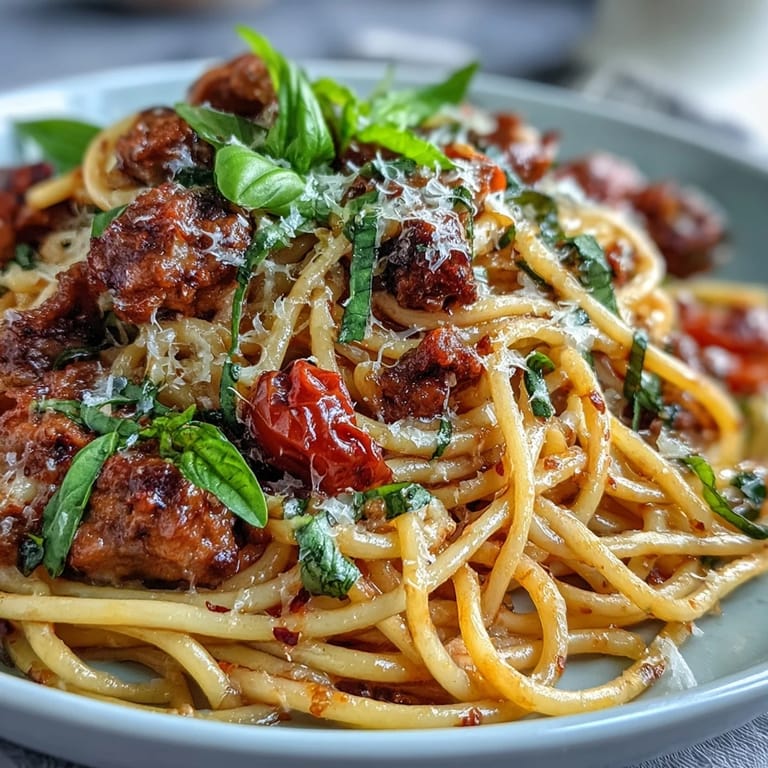
 One evening, I made this for a friend who was convinced she didn't like fusion food. She took one bite, paused, and asked if I'd used some kind of secret ingredient because it tasted both familiar and completely new. When I told her it was just soy sauce and Chianti playing together, she laughed and had a second helping. That night, I realized this dish doesn't just feed people, it starts conversations and changes minds about what belongs together on a plate.
Choosing Your Protein
I've made this with hot Italian sausage when I wanted something bold and fennel-forward, and with sweet sausage when cooking for friends who prefer milder spice. Shrimp is my choice on warmer nights when I want the dish to feel lighter and more delicate, and it cooks so fast you can have dinner on the table in less than thirty minutes. For a vegetarian version, I've used thick slices of sautéed mushrooms or cubed marinated tofu, and both soak up the wine sauce beautifully. The key is to brown whatever protein you choose well, because those caramelized edges add depth to the final dish.
Wine Matters
The first time I made this, I grabbed a cheap bottle of red from the back of my pantry and the sauce tasted flat and slightly sour. Now I always use a Chianti or Sangiovese I'd actually enjoy drinking, because if it tastes good in the glass, it will taste even better in the pan. The wine's acidity cuts through the richness of the sausage and cheese, and its berry notes complement the sweetness of the tomatoes. Pour yourself a glass while you cook, it's part of the experience and you'll need it to taste-test your way to perfection.
Storing and Reheating
Leftovers keep well in a covered container in the fridge for up to three days, though the pasta will soak up some of the sauce as it sits. When I reheat it, I add a splash of water or a little more wine to loosen everything up, then warm it gently in a skillet over medium-low heat, stirring frequently. The microwave works in a pinch, but the stovetop brings back that just-cooked texture and keeps the sauce from drying out.
- Add a handful of fresh basil when reheating to brighten up the flavors that may have mellowed overnight.
- If the pasta seems dry, a drizzle of olive oil or a spoonful of pasta water will bring it back to life.
- Freeze individual portions in airtight containers for up to a month, and thaw overnight in the fridge before reheating.
 Save Pin
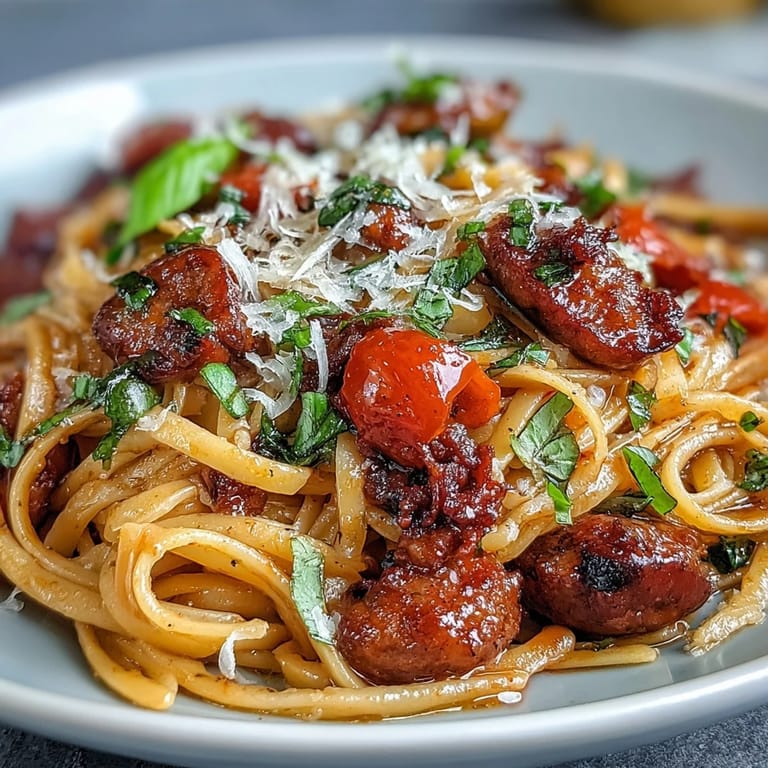
 This dish has become my answer to what's for dinner when I want something that feels special but doesn't require hours in the kitchen. Every time I make it, I'm reminded that the best recipes are the ones that break the rules and create something entirely their own.
Recipe Questions & Answers
- → What makes Italian drunken noodles unique?
This dish fuses Italian pasta with Asian noodle techniques by incorporating soy sauce, Worcestershire, and reduced Chianti wine into a classic tomato-based sauce, creating layers of umami and sweetness.
- → Can I make this vegetarian?
Yes, simply omit the sausage or shrimp and substitute sautéed mushrooms or marinated tofu. The result remains hearty and satisfying with the same bold Chianti tomato sauce.
- → What type of wine works best?
Chianti or Sangiovese are ideal choices, but any dry red wine like Merlot or Pinot Noir will add richness and depth to the sauce while complementing the spicy sausage.
- → How spicy is this dish?
The red pepper flakes provide moderate heat that's adjustable. Use less for a gentle warmth or add fresh chilies for extra fire. The sauce balances spice with sweet tomatoes and wine.
- → Can I use different pasta shapes?
While spaghetti and linguine work beautifully, fettuccine, pappardelle, or even penne will capture the wine-kissed sauce. Choose shapes with enough surface area to hold the chunky tomato mixture.
- → How should leftovers be stored?
Keep covered in the refrigerator for up to 3 days. Reheat gently with a splash of water or wine to revive the sauce, as the pasta will absorb more liquid overnight.