 Save Pin
 There's something almost meditative about the way miso soup comes together—I discovered this years ago when a friend's grandmother quietly handed me a bowl on a cold morning, steam rising into my face, and I understood instantly why this simple broth had survived centuries. The umami hit differently than anything I'd tasted before, and watching her unhurried movements as she prepared it made me realize this wasn't just food, it was a ritual. Now when I make it, I chase that same feeling of calm that comes from knowing exactly what you're doing and why.
I made this for my roommate during exam week when she'd been living on coffee and stress, and watching her shoulders drop after the first sip reminded me that sometimes the most healing thing you can offer someone is something simple, warm, and made with intention. She started asking me to make it every few days after that, which is when I realized miso soup had become my kitchen's small act of care.
Ingredients
- Dashi stock (4 cups): This is the soul of the soup—use vegetarian dashi made from kombu seaweed and shiitake if you're keeping it plant-based, and don't skip making it fresh if you can, though quality instant dashi works beautifully in a pinch.
- White or yellow miso paste (3 tablespoons): The fermented backbone that brings umami and probiotics; I learned the hard way that red miso is deeper and more assertive, so if you're new to this, start with white and taste as you go.
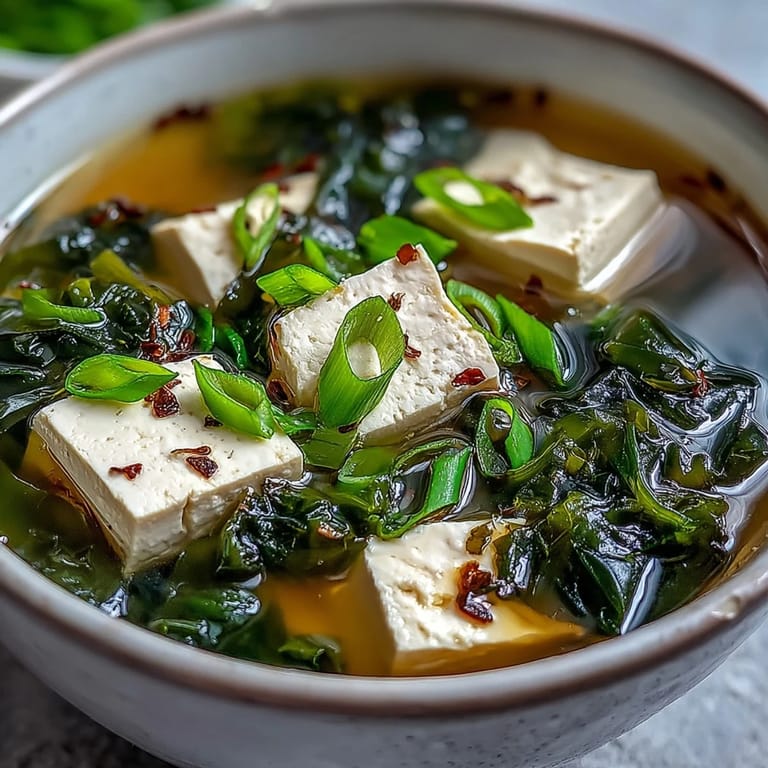
- Silken tofu (200 g, cut into 1/2-inch cubes): Silken is non-negotiable here because it's delicate enough to almost melt, unlike firmer varieties that would feel out of place in this delicate broth.
- Dried wakame seaweed (2 tablespoons): Those tender ribbons rehydrate into something almost buttery, and they carry their own subtle mineral flavor that grounds the whole bowl.
- Scallions (2, finely sliced): The bright, fresh finish that cuts through the richness and reminds your palate this is spring in a bowl.
Tired of Takeout? 🥡
Get 10 meals you can make faster than delivery arrives. Seriously.
One email. No spam. Unsubscribe anytime.
Instructions
- Bring your dashi to a gentle simmer:
- Pour the stock into a medium saucepan and let it warm over medium heat—you're looking for small bubbles at the edges, not a rolling boil, because aggressive heat can strip delicate flavors.
- Wake up the seaweed:
- While the broth warms, submerge your dried wakame in cold water for about 5 minutes until it softens and unfurls, then drain it well so you're not adding excess water to the soup.
- Make a miso slurry:
- Scoop your miso paste into a small bowl and add a ladleful of the hot dashi, whisking steadily until it's completely smooth—this prevents lumps from forming when it meets the rest of the broth.
- Introduce the tofu and seaweed:
- Gently add your soft tofu cubes and drained wakame directly to the simmering stock, letting them warm through for 2 to 3 minutes while you resist the urge to stir aggressively so the tofu stays intact.
- Marry everything with miso:
- Pull the pan off the heat and stir in your miso slurry with slow, deliberate movements—this is crucial because boiling miso destroys the living cultures and flattens the flavor you worked to build.
- Serve with intention:
- Ladle the soup into bowls, scatter the raw scallions across the top, and serve immediately while the steam is still rising.
 Save Pin
 My favorite version of this memory came on a night when I made it for my partner after they'd had a terrible day, and I watched them sit quietly with the bowl for ten minutes without speaking—not because anything was wrong, but because sometimes food creates that kind of pause. That's when I understood that miso soup isn't about impressing anyone; it's about understanding that sometimes people need to be held by something warm.
The Secret to Silken Tofu
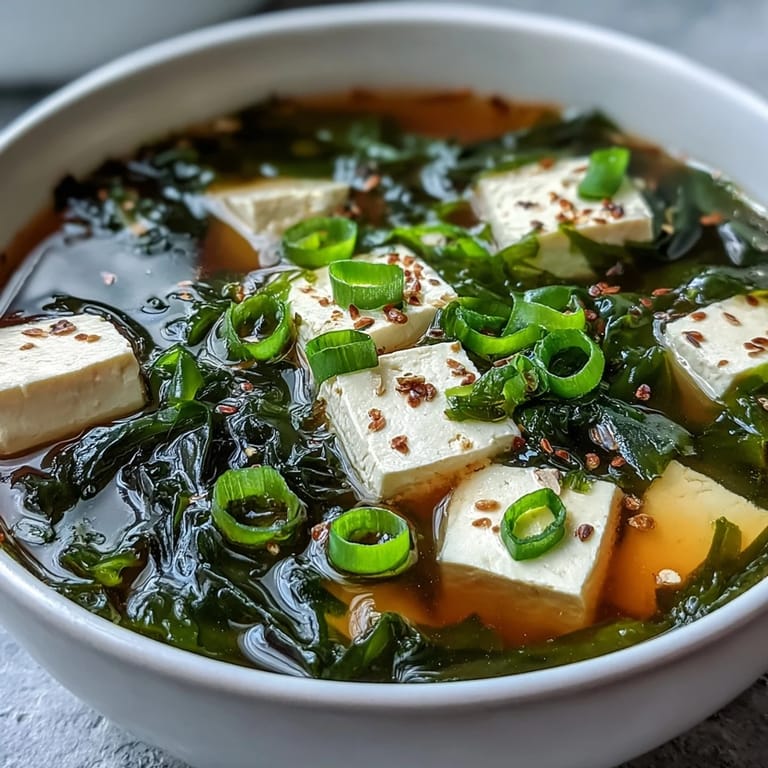
The moment I switched from firm to silken tofu, everything changed—it turned from a soup with vegetables into something that felt cohesive, almost creamy without any cream. The tofu needs to be treated like something precious; I use a spoon to add it rather than pouring from the container, and I never stir aggressively once it's in the pot. Think of it as something you're tucking into bed rather than mixing into a salad.
Dashi Variations That Matter
I spent months thinking all dashi was the same until I tasted the difference between kombu-shiitake (vegetarian, earthy, subtle) and bonito-based (ocean-forward, assertive, traditional). The vegetarian version is what I reach for now because it lets the miso and tofu shine without competing voices, though if you've grown up with the oceanic version, that's equally valid and beautiful. Each brings a different energy to the same basic bowl.
Customizing Without Losing the Point
This is where people get nervous, but miso soup is actually forgiving once you understand the core—the broth, the miso, the tofu are non-negotiable, but everything else can shift with your mood or what's in your fridge. I've added thinly sliced mushrooms for earthiness, fresh spinach for spring, even a soft-poached egg when I needed protein to carry me through an afternoon. The only rule is that additions should be gentle and quiet, not drowning out the quiet confidence of the broth itself.
- Mushrooms (shiitake, enoki, or cremini) add umami that echoes the miso beautifully.
- A handful of fresh spinach wilts in seconds and brings color and minerals.
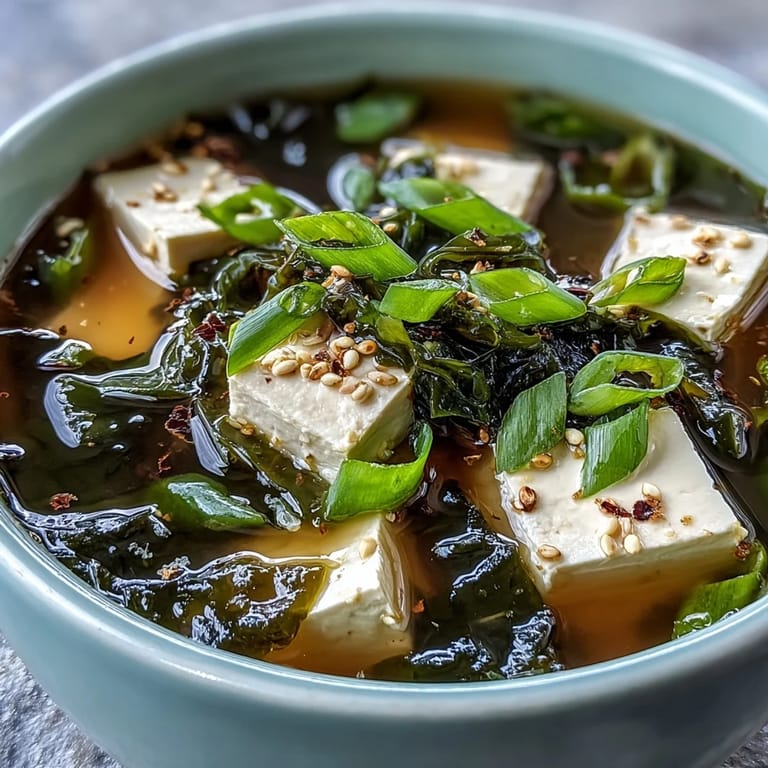
- Nori strips scattered on top add a briny note that feels like the ocean in your mouth.
 Save Pin
 There's comfort in knowing how to make something this simple that nourishes both body and spirit. This bowl has become my answer to so many questions—am I tired, sad, rushed, or just hungry?—because it never fails to say exactly what I need to hear.
Recipe Questions & Answers
- → What type of miso works best?
White or yellow miso paste offers a milder, sweeter flavor perfect for beginners. Red miso provides deeper, more intense umami. You can also blend white and red pastes for added complexity.
- → Why shouldn't I boil miso?
Boiling miso paste destroys beneficial probiotics and enzymes that make it nutritionally valuable. Always dissolve miso in warm liquid off the heat, then return the soup to a gentle simmer just until warmed through.
- → Can I make this vegan?
Yes. Use kombu (kelp) and shiitake mushroom-based dashi instead of traditional bonito fish stock. Most miso pastes are naturally vegan, but always check labels to confirm no fish-derived ingredients are included.
- → How long does this keep?
Best enjoyed immediately. The tofu can become rubbery and miso flavor can diminish upon reheating. If storing, keep soup and miso separate—combine just before serving and reheat gently without boiling.
- → What can I add for more substance?
Thinly sliced shiitake mushrooms, baby spinach, snow peas, or cooked udon noodles transform this into a heartier bowl. A soft-boiled egg or shredded cooked chicken also adds protein if you eat meat.