 Save Pin
 My neighbor stopped by one afternoon smelling like wet earth after gardening, and I had a pot of mung beans simmering on the stove. The kitchen was warm and steamy, and she asked what I was making before she even stepped inside. When I told her it was a simple mung bean soup, her face lit up like I'd offered her something rare. She stayed for a bowl, and halfway through, she said she could feel it settling into her bones in the best way. That's when I realized this soup was doing something more than just nourishing—it was healing.
I made this soup for my sister during a particularly stressful week when she was barely sleeping. She showed up at my door looking exhausted, and I already had the mung beans soaking. By the time the aromatics hit the pan, her shoulders had visibly dropped. She sat at the counter watching steam rise from the pot, and didn't say much, but she ate two bowls and left with a container for the following morning. Sometimes the best medicine isn't complicated—it's just someone who understands that you need something warm and grounding.
Ingredients
- Dried mung beans, rinsed and soaked for 2 hours: Soaking softens them so they cook evenly and become creamy without falling apart, and it also makes them easier on digestion.
- Medium onion, finely chopped: This is your flavor foundation—don't rush the sauté or you'll miss the sweet, mellow depth it develops.
- Garlic and fresh ginger: These two are the soul of the soup, so use fresh and don't skimp; they wake up every other flavor in the pot.
- Carrots and celery, diced: They add body and sweetness, but dice them small so they soften and disappear into the broth naturally.
- Medium tomato, chopped: This adds a subtle tang that brightens everything without making the soup taste obviously tomato-based.
- Cumin seeds, turmeric, ground coriander, black pepper, cinnamon: Toast the cumin first to release its oils, then layer the others in so each spice gets a moment to bloom in the heat.
- Bay leaf: Add it early but remove it before serving—it flavors the whole pot without being intrusive.
- Vegetable broth or water: Broth is richer, but water lets the beans and spices shine if that's what you prefer.
- Salt and lemon juice: Add these at the end so you control the final balance; lemon brightens everything without making it sour.
- Fresh cilantro for garnish: It's not just decoration—it adds a fresh, peppery finish that makes people notice the difference.
Tired of Takeout? 🥡
Get 10 meals you can make faster than delivery arrives. Seriously.
One email. No spam. Unsubscribe anytime.
Instructions
- Toast the cumin seeds first:
- Heat your pot over medium heat and add just the cumin seeds. Let them sit for about a minute until they smell warm and nutty—you'll hear them crackling slightly. This small step is what separates a flat soup from one that tastes deliberately spiced.
- Build your aromatics layer:
- Add the onion, garlic, and ginger to the toasted cumin and sauté for 3 to 4 minutes until the onion turns translucent and everything smells amazing. You'll know it's ready when the raw garlic sharpness is gone and you can smell the sweetness underneath.
- Add the supporting vegetables:
- Stir in the carrots and celery and cook for another 2 to 3 minutes just to take the raw edge off them. They don't need to soften much here—the long simmer will finish the job.
- Bloom the remaining spices:
- Add the turmeric, coriander, black pepper, cinnamon if you're using it, and the bay leaf. Stir everything together and let it cook for about a minute so the spices release their flavors into the oil. This is when your kitchen will smell most incredible.
- Combine everything and bring to a boil:
- Add your drained mung beans, the chopped tomato, and the broth or water. Stir well so nothing sticks to the bottom, then turn up the heat and let it come to a rolling boil. Once you see bubbles breaking the surface, you're ready for the long, gentle simmer.
- Simmer until the beans are tender:
- Lower the heat and cover the pot partially, letting it simmer for 35 to 40 minutes until the mung beans have completely softened and are starting to break down slightly. Stir occasionally to make sure nothing's sticking, and if the liquid seems too thick, add a splash of water.
- Finish and adjust seasoning:
- Remove the bay leaf, then taste and add salt and lemon juice gradually. The lemon juice is crucial—it wakes up all the flavors and prevents the soup from tasting one-dimensional, so don't skip it even if you think you will.
- Serve with intention:
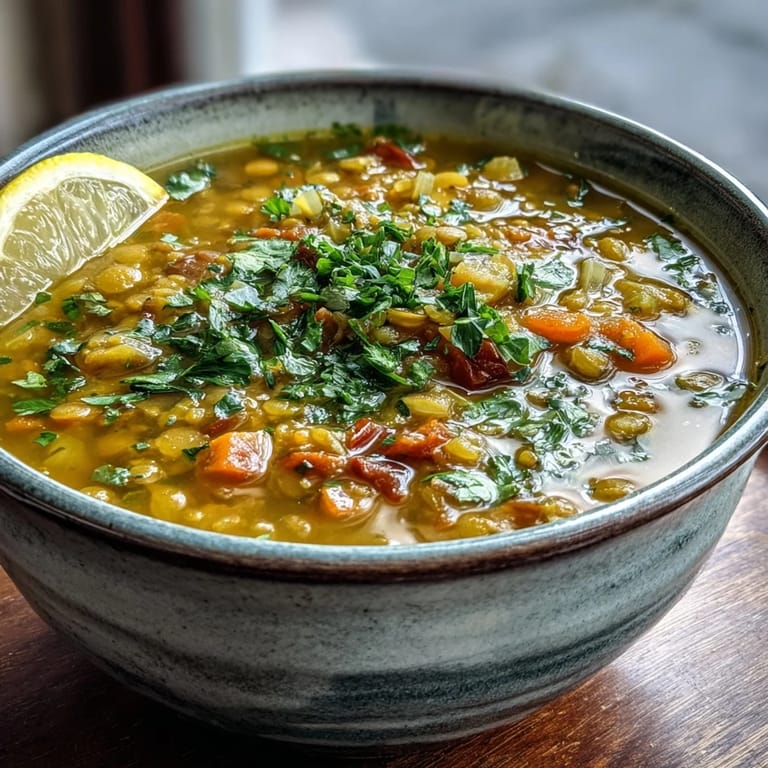
- Ladle the soup into bowls and scatter cilantro on top. If you want richness, drizzle a little coconut milk into each bowl right before serving, which adds a creamy sweetness that complements the spices perfectly.
 Save Pin
 One morning I made this soup and my partner came downstairs as I was pouring it into bowls. He took a spoonful before sitting down and said it tasted like the answer to a question he didn't know he was asking. We didn't talk much that breakfast, just ate slowly and let the warmth do what it needed to do. That's when I understood that some meals are about more than hunger—they're about being present with someone and letting good food say the things words can't quite reach.
The Secret to Creamy Mung Beans
The first time I made this soup without soaking the beans, I thought I was being efficient and ended up with a pot of soup where the beans stayed firm and slightly grainy in the center. Now I always soak them, and the difference is stark—the beans become so soft they almost dissolve into the broth, creating a naturally creamy texture without any cream at all. That's when the soup stops being a collection of ingredients and becomes something unified and comforting.
When to Add Coconut Milk
Coconut milk is optional, but if you want to add it, wait until the last 10 minutes of cooking. Stir it in gently so it swirls through the soup without fully mixing in—you get these pockets of richness that hit your tongue unexpectedly. I learned this by adding it too early once and ending up with a uniformly creamy soup that lost some of the spice definition. The restraint makes it better.
Pairing and Serving Ideas
This soup is complete on its own, but serving it with warm naan or steamed rice transforms it from a light lunch into something more substantial and satisfying. I sometimes make crispy chickpeas to scatter on top for texture, or I'll serve it alongside a simple salad if I want something fresher and less heavy. The soup also keeps beautifully in the refrigerator for up to four days, and it actually tastes better the second day when all the flavors have had time to meld together and deepen.
- Store leftovers in an airtight container and reheat gently over low heat, adding a splash of water if it's thickened too much.
- This soup freezes well for up to three months, so make a double batch and save half for a morning when you need something warming fast.
- If you want it spicier, add a diced green chili when you sauté the onions, or pass hot sauce at the table and let people adjust to their own preference.
 Save Pin
 This soup has become my answer to almost everything—a cold coming on, a stressful week, someone I care about who needs feeding, or just a morning when I want to feel grounded. It asks so little of you and gives so much in return.
Recipe Questions & Answers
- → Do I need to soak the mung beans before cooking?
Yes, soaking the mung beans for 2 hours helps reduce cooking time and improves digestibility. If you're short on time, you can skip soaking but will need to extend the cooking time by 15-20 minutes.
- → Can I use split mung beans instead of whole ones?
Absolutely! Split mung beans (moong dal) cook faster and don't require soaking. Reduce the cooking time to about 20-25 minutes and use slightly less liquid since they break down more quickly.
- → How can I make this soup creamier?
Add a splash of coconut milk during the last 10 minutes of cooking for extra richness. You can also blend a portion of the soup and stir it back in to create a creamier texture while keeping some whole beans intact.
- → What can I serve with this soup?
This soup pairs wonderfully with warm naan bread, steamed basmati rice, or crusty whole grain bread. For a lighter meal, serve it with a side salad or roasted vegetables.
- → How long does this soup keep in the refrigerator?
Store the soup in an airtight container in the refrigerator for up to 5 days. The flavors actually deepen over time. You may need to add a bit of water or broth when reheating as the beans absorb liquid.
- → Can I freeze mung bean soup?
Yes, this soup freezes excellently for up to 3 months. Cool completely before transferring to freezer-safe containers, leaving some room for expansion. Thaw overnight in the refrigerator and reheat gently on the stovetop.