 Save Pin
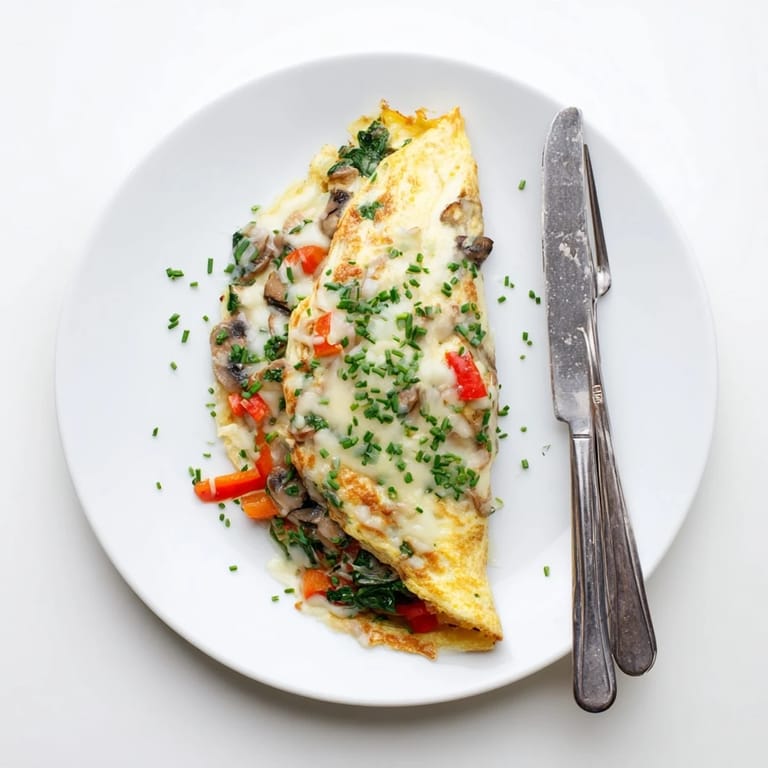
 There is something almost magical about the way eggs transform in a hot pan, turning from liquid to gold in mere minutes. I learned this watching my grandmother flip omelets with a casual confidence that made it look effortless. Of course, my first dozen attempts were disasters that ended up as scrambled eggs instead. But there is a particular satisfaction when you finally nail that smooth, unbroken curd and get the timing just right enough to create something that looks like it belongs on a bistro menu.
Last winter, my partner woke up craving something warm and comforting before heading out into the bitter cold. I threw together this exact recipe with whatever cheese we had in the fridge and some leftover ham. The way the kitchen smelled of melting butter and eggs made the whole house feel cozier. Now it has become our weekend ritual, slow mornings with coffee and something simple made with care.
Ingredients
- 4 large eggs: Room temperature eggs whisk up better and incorporate more air for that fluffy texture
- 2 tablespoons milk or cream: A splash of dairy makes the eggs more tender and luxurious
- 1 tablespoon unsalted butter: Butter gives better flavor than oil and helps prevent sticking in the pan
- 80 g grated cheese: Gruyère melts beautifully but sharp cheddar or creamy Emmental work just as well
- Salt and black pepper: Essential for bringing out all the flavors in the eggs
- Fresh herbs: Chives or parsley add a bright finish that cuts through the richness
Tired of Takeout? 🥡
Get 10 meals you can make faster than delivery arrives. Seriously.
One email. No spam. Unsubscribe anytime.
Instructions
- Whisk the eggs:
- Crack eggs into a bowl and whisk with milk, salt, and pepper until slightly frothy and fully combined
- Heat the pan:
- Melt butter in a nonstick skillet over medium heat until it bubbles but does not brown
- Cook the base:
- Pour in the egg mixture, tilt the pan to spread evenly, and let cook undisturbed for one minute until edges begin to set
- Add fillings:
- Sprinkle cheese evenly over the eggs and add any desired fillings like ham or vegetables
- Finish cooking:
- Lift edges gently to let uncooked egg flow underneath and cook one to two minutes until nearly set but still slightly creamy
- _fold and serve:
- Fold the omelet in half, cook thirty seconds more, then slide onto a plate and garnish with herbs
 Save Pin
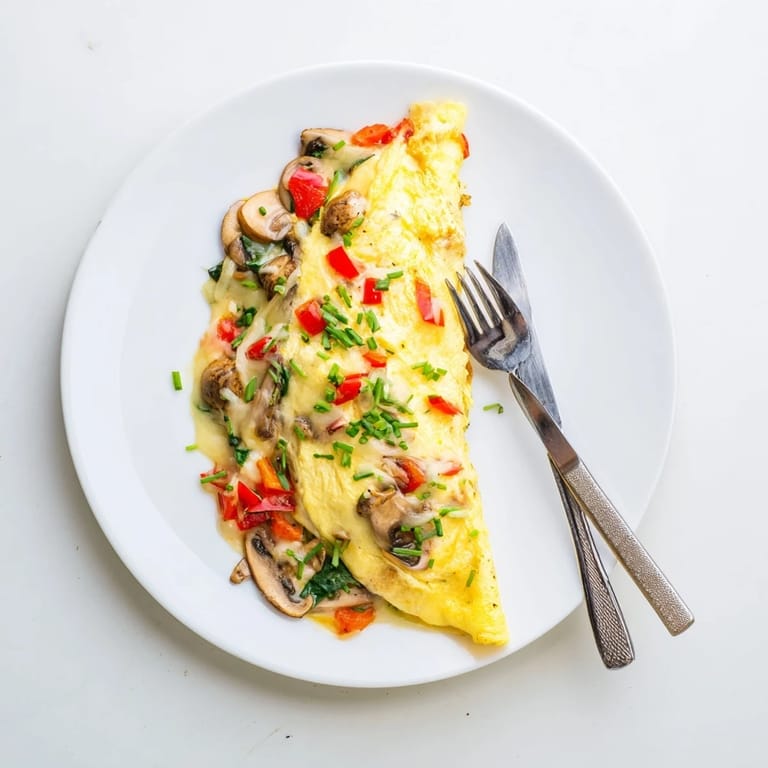
 The first time I served this to friends, I was nervous about presenting something so simple. But there is something universal about the comfort of eggs and cheese that makes people feel at home. Now it is my go to when I want to feed someone without making a fuss about it.
Choosing the Right Cheese
Not all cheeses melt the same way and some will turn grainy or greasy instead of smooth. Gruyère is classic because it melts beautifully and has enough nutty flavor to stand out. Sharp cheddar brings a bold tang while Emmental stays mild and creamy. The key is grating it yourself because pre shredded cheese has anti caking agents that interfere with melting.
Pan Selection Matters
A good nonstick pan is almost essential for omelet success because the eggs are fragile and need to release cleanly. An eight to ten inch skillet gives you enough surface area for even cooking while keeping the eggs thick enough to stay tender. If your pan is warped or the coating is damaged, your omelet will stick and tear no matter how careful you are.
Timing Your Fold
The secret is folding when the top still looks slightly undercooked because residual heat will finish it as it sits. If you wait until the eggs look completely set, you will end up with a dry, rubbery texture. The center should have a soft, custard like quality that feels luxurious when you cut into it.
- Have your plate ready before you start the final fold
- Lift the handle slightly when folding to help the omelet slide out
- Season right before serving for the brightest flavor
 Save Pin
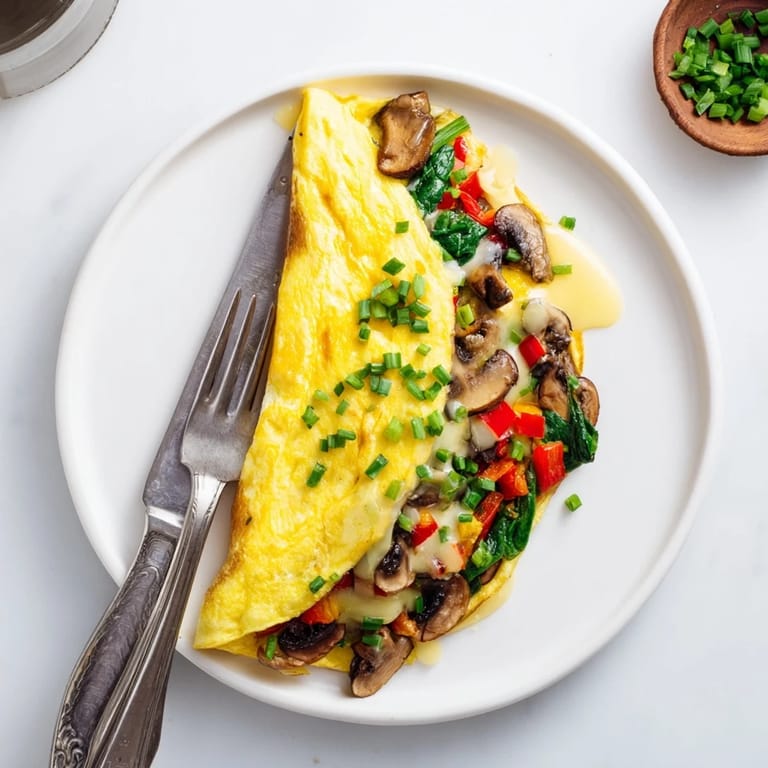
 An omelet is never just breakfast, it is a small moment of comfort you can create whenever you need it most.
Recipe Questions & Answers
- → What's the secret to a fluffy omelet?
Whisk eggs vigorously with a splash of milk or cream until slightly frothy. This incorporates air for lighter texture. Cook over medium heat and don't overcook—the center should remain slightly creamy when you fold it.
- → Which cheese melts best in omelets?
Gruyère offers exceptional melting properties with nutty flavor. Cheddar provides sharp, familiar taste, while Emmental melts beautifully with mild Swiss character. Avoid fresh cheeses that don't melt smoothly.
- → Can I prepare omelets ahead of time?
Omelets taste best immediately after cooking while the cheese remains perfectly melted and eggs at ideal texture. Reheating can cause rubbery eggs. If meal prepping, cook fillings separately and quickly assemble fresh eggs when ready to eat.
- → Why use butter instead of oil?
Butter adds essential flavor and helps achieve that golden-brown exterior. Milk solids in butter promote proper browning, creating those characteristic French omelet edges. Oil works but lacks the same depth of flavor.
- → What vegetables work well inside?
Quick-cooking vegetables like diced bell peppers, sautéed mushrooms, and fresh spinach are ideal. Pre-cook harder vegetables until tender. Soft fillings prevent the delicate egg structure from breaking during folding.
- → How do I prevent my omelet from sticking?
Use a quality nonstick skillet in the 20–24 cm range. Heat butter until bubbly but not browned before adding eggs. Let the bottom set briefly before attempting to lift edges with a spatula.