 Save Pin
 There's something about a pot of vegetable soup simmering on the stove that turns an ordinary afternoon into something grounded and real. My neighbor knocked on the door one chilly October with a bag of potatoes from her garden, and I suddenly remembered why I loved making this soup—it's the kind of dish where you can taste the seasons changing, where what you have on hand becomes exactly what you need. The steam rising up, the way the kitchen smells like earth and time slowing down, that's when I know something good is happening.
I made this soup for my sister when she was staying with me between jobs, and we sat at the kitchen table with two bowls, not talking much, just eating. She said it tasted like someone cared, which is exactly what I was hoping for. That's when this recipe stopped being about ingredients and became about the quiet moments we share with the people we love.
Ingredients
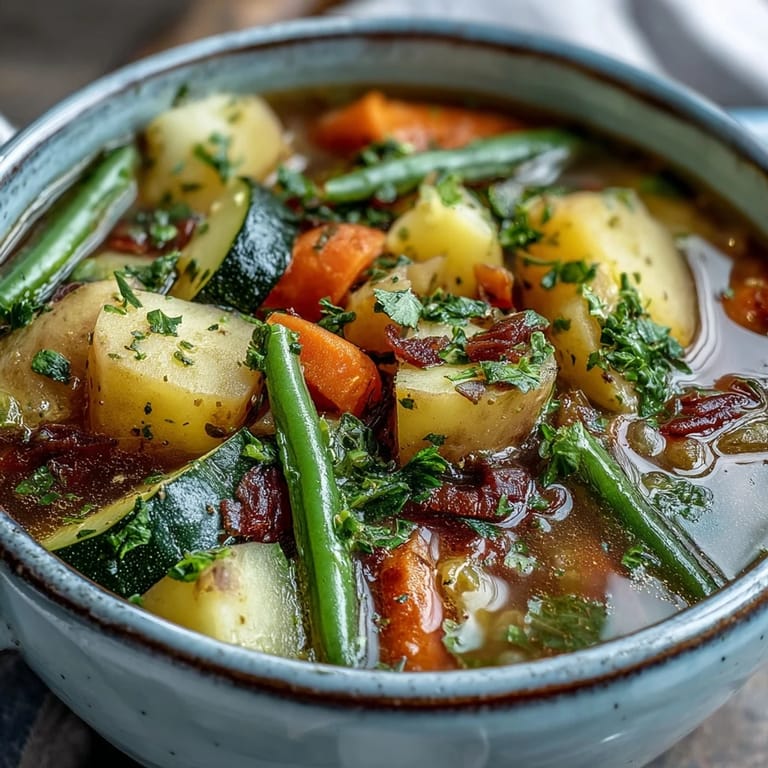
- Potatoes (3 medium, peeled and diced): These are your soup's backbone—they soften into creamy pockets without falling apart if you don't overcook them, which is why keeping an eye on the timer actually matters here.
- Carrots (2 medium, peeled and sliced): Sweet undertones that balance everything else; I learned to slice them thin enough that they cook in the same time as the potatoes.
- Celery stalks (2, diced): This is the quiet ingredient that nobody mentions but everyone tastes—it adds depth you can't quite name.
- Onion (1 medium, chopped): The flavor foundation that melts into the broth and makes everything else taste like itself.
- Zucchini (1, diced): It disappears slightly into the soup, making it lighter and adding a whisper of summer even in winter.
- Green beans (1 cup, cut into 1-inch pieces): They keep a little bit of snap, which I appreciate when everything else has gone soft.
- Garlic (2 cloves, minced): Just enough to remind you it's there without shouting—mince it fine so it distributes evenly.
- Vegetable stock (6 cups): This is your canvas; use something with flavor you actually enjoy drinking on its own.
- Bay leaf (1): Remove it at the end—I learned this the hard way after biting into one once.
- Dried thyme and parsley (1 teaspoon each): These dried herbs have time to release their flavor as the soup simmers.
- Black pepper and salt (½ teaspoon and 1 teaspoon): Taste as you go; salt can always be added but it's harder to take out.
- Olive oil (2 tablespoons): This helps everything sauté without sticking and carries the flavors forward.
- Frozen peas (1 cup): Added at the very end so they stay bright and don't turn to mush.
- Fresh parsley for garnish: Optional but worth it—the color matters, and so does that fresh herb taste at the end.
Tired of Takeout? 🥡
Get 10 meals you can make faster than delivery arrives. Seriously.
One email. No spam. Unsubscribe anytime.
Instructions
- Get your base going:
- Heat the olive oil in your pot over medium heat and add the onion, carrots, and celery all at once. Let them soften for about five minutes, stirring now and then—you're not trying to brown them, just coax out their sweetness. When your wooden spoon glides through without resistance, you'll know they're ready.
- Wake up the garlic:
- Add your minced garlic and stir it in for just one minute, just long enough to smell how good it is. Too long and it turns bitter, so stay close and trust your nose.
- Add the sturdy vegetables:
- Stir in the potatoes, green beans, and zucchini, letting them mingle with the softer vegetables for about two minutes. This coating in oil helps them cook more evenly.
- Pour in the broth:
- Add the vegetable stock along with the bay leaf, thyme, parsley, salt, and pepper, stirring to make sure everything is submerged and the seasonings are distributed. The liquid should rise above the vegetables by about an inch.
- Let it simmer:
- Bring the pot to a boil, then immediately lower the heat and cover it. Let it bubble gently for twenty to twenty-five minutes until the potatoes and vegetables are completely tender when you poke them with a fork. This is the time to wipe down your counters or just sit with a cup of tea.
- Finish with brightness:
- Stir in the frozen peas and cook for just two to three more minutes—they'll thaw quickly and keep their color. Remove the bay leaf before serving, running your spoon along the bottom to catch it.
- Serve with intention:
- Ladle the soup into bowls and finish with a small handful of fresh parsley if you have it. The heat will soften it just slightly while keeping its green. Serve while it's hot enough to comfort.
 Save Pin
 My ten-year-old once asked why I made soup when I could just order delivery, and I realized I didn't have a good answer except that making soup feels like an act of small rebellion against rush and convenience. There's something about moving at soup speed that changes how you move through the rest of your day.
When to Make This
This soup is the kind you make when the weather turns and you want your kitchen to smell like comfort, but it's also perfect for meal prep because it keeps beautifully in the refrigerator for three or four days. I've made it on Sunday evenings when Monday feels too far away and everything needs softening, and I've made it on random Thursdays just because the vegetables looked particularly good at the market. The season doesn't really matter—spring vegetables are bright, fall ones are hearty, and in winter you can use almost anything frozen.
How to Make It Your Own
The architecture of this soup stays the same, but the details can shift depending on what you have and what you're craving. I've added handfuls of spinach at the end, switched the carrots for parsnips, thrown in chunks of mushroom, even added diced tomatoes when I had them. The stock itself can be swapped—I once used chicken stock when that's what I had, and it was delicious in a different way.
Making It Richer or Lighter
If you want this soup to feel more indulgent, a splash of cream stirred in at the very end transforms it into something more luxurious, or you could grate some sharp cheddar over each bowl. For keeping it plant-forward and clean, the soup as written is deeply satisfying—sometimes I add an extra handful of vegetables instead of cream, and it becomes even more nourishing. You can also serve it with crusty bread to soak up the broth, which feels essential in my opinion.
- Stir in cream or grated cheese just before serving for extra richness, or keep it pure and vegetable-forward.
- Make it ahead and store it in the refrigerator for three to four days, or freeze it in portions for up to three months.
- Taste and adjust the seasonings before serving—every stock is different, and you might need more salt or a pinch more pepper than the recipe suggests.
 Save Pin
 This is the kind of recipe that becomes part of your kitchen repertoire without you really noticing—one day you're following instructions, and the next you're making it by feel and memory. That's when you know it's working.
Recipe Questions & Answers
- → Can I use different vegetables in this soup?
Absolutely! Feel free to substitute with seasonal vegetables like corn, spinach, kale, or bell peppers. The cooking time may vary slightly depending on the vegetables you choose.
- → How do I make this soup creamier?
For a richer texture, stir in a splash of heavy cream, coconut milk, or add a handful of grated cheese just before serving. You can also blend a portion of the soup and stir it back in.
- → Can I freeze this soup for later?
Yes, this soup freezes well for up to 3 months. Let it cool completely, then store in airtight containers. Thaw overnight in the refrigerator and reheat on the stovetop.
- → What can I serve with this soup?
This soup pairs wonderfully with crusty bread, garlic toast, or a simple green salad. For a heartier meal, serve alongside grilled cheese sandwiches.
- → How long will leftovers keep in the refrigerator?
Store leftovers in an airtight container in the refrigerator for up to 4 days. Reheat gently on the stovetop or in the microwave, adding a splash of water or broth if needed.
- → Is this soup suitable for vegans?
As written, yes, as long as you use vegan vegetable stock and avoid adding cream or cheese. Always check your stock ingredients to ensure they're plant-based.