 Save Pin
 There's something about a pot of simmering tomato lentil soup that transforms a quiet afternoon into something warm and grounding. My neighbor mentioned she'd been making this for her family all winter, and one afternoon the smell drifted over the fence—bright tomatoes, earthiness from the lentils, something smoky underneath. I had to ask for the recipe, and what she handed me was beautifully simple: vegetables, lentils, broth, spices. Nothing fancy, but somehow everything you need.
I made this for friends who'd just moved into a tiny apartment with barely any kitchen equipment, and we crowded around their small table with mismatched bowls. One of them said it tasted like something you'd get at a restaurant, and I realized then that simple doesn't mean forgettable—it just means honest. That soup became their default weeknight meal, and now they text me soup updates.
Ingredients
- Medium onion, finely chopped: The foundation—when it softens, it loses its sharp bite and becomes naturally sweet, which balances the acidity of the tomatoes.
- Medium carrots, diced: They add body and a subtle sweetness that deepens as the soup simmers, making the whole thing feel more substantial.
- Celery stalks, diced: This is the quiet player that rounds out the flavor profile with a gentle, almost mineral undertone.
- Garlic cloves, minced: Three cloves might seem bold, but they become mellow and almost creamy once they cook into the soup.
- Canned diced tomatoes (400 g / 14 oz): Canned tomatoes are actually more reliable than fresh for soup—they're picked at peak ripeness and already broken down, which means you get a cleaner, brighter flavor.
- Tomato paste (1 tbsp): Just a tablespoon adds concentrated depth and helps the soup taste like it's been simmering for hours when it really hasn't.
- Dried brown or green lentils, rinsed (1 cup / 200 g): Brown and green lentils hold their shape better than red ones, so you get distinct little bites of texture throughout instead of mushiness.
- Vegetable broth (5 cups / 1.2 liters): Use a good quality broth if you can—it's the backbone here, and it makes a noticeable difference in the final taste.
- Olive oil (1 tbsp): Not much is needed since the soup isn't heavy, but this base layer of oil carries the flavors of the vegetables as they soften.
- Ground cumin (1 tsp): Adds a warm earthiness that ties everything together without announcing itself.
- Smoked paprika (1 tsp): This is where the subtle complexity comes in—it gives the soup a gentle smokiness that makes people ask what you did differently.
- Dried thyme (1/2 tsp): Thyme is quiet but essential, adding an herbaceous note that keeps the soup from tasting one-dimensional.
- Ground black pepper (1/2 tsp): Just enough to give the soup a gentle bite without overwhelming anything.
- Salt (1 tsp): Start with this amount and taste as you go—salt intensifies as the soup simmers, so you might not need more at the end.
- Bay leaf (1): Remove it before serving, but while it's simmering it adds a subtle herbal undercurrent that's hard to place but impossible to miss.
- Fresh parsley, chopped (2 tbsp, optional): A sprinkle of fresh parsley at the end wakes up the flavors and adds a bright green note that makes the soup feel finished.
- Lemon juice (1/2 lemon): This is the magic touch—it punches through the richness and makes all the other flavors sing brighter.
Tired of Takeout? 🥡
Get 10 meals you can make faster than delivery arrives. Seriously.
One email. No spam. Unsubscribe anytime.
Instructions
- Build your flavor foundation:
- Heat the olive oil in a large pot over medium heat until it shimmers slightly. Add your chopped onion, carrots, and celery, and let them cook for about 5 minutes, stirring occasionally—you're looking for them to soften and become translucent at the edges. The kitchen will start to smell like the beginning of something good.
- Wake up the garlic:
- Stir in your minced garlic and cook for just about 1 minute—this is quick because garlic burns easily and we want sweet, mellow garlic, not bitter. You'll know it's ready when the aroma becomes fragrant and almost sweet.
- Toast the spices:
- Add the tomato paste, cumin, smoked paprika, thyme, and black pepper all at once, stirring constantly for about 1 minute. This toasting step is what makes the soup taste complex—the heat brings out the oils in the spices and builds depth you wouldn't get otherwise.
- Bring everything together:
- Pour in your diced tomatoes with their juice, then add the rinsed lentils, vegetable broth, bay leaf, and salt. Stir everything well so nothing sticks to the bottom, then let it come to a boil—you'll see the surface bubble and the steam rise up. The whole pot transforms from separate ingredients into something unified.
- Let it simmer:
- Once it's boiling, reduce the heat to low, cover the pot, and let it simmer gently for 30 minutes. The lentils will gradually soften and the flavors will marry together—this is where patience pays off. Occasionally give it a stir and listen to the quiet bubbling sound.
- Finish with brightness:
- Remove the bay leaf, then squeeze in the lemon juice and give the soup a taste. Adjust the salt if needed—you might find it wants just a tiny bit more, or you might be surprised at how balanced it already is. The lemon brings everything into focus.
- Serve with intention:
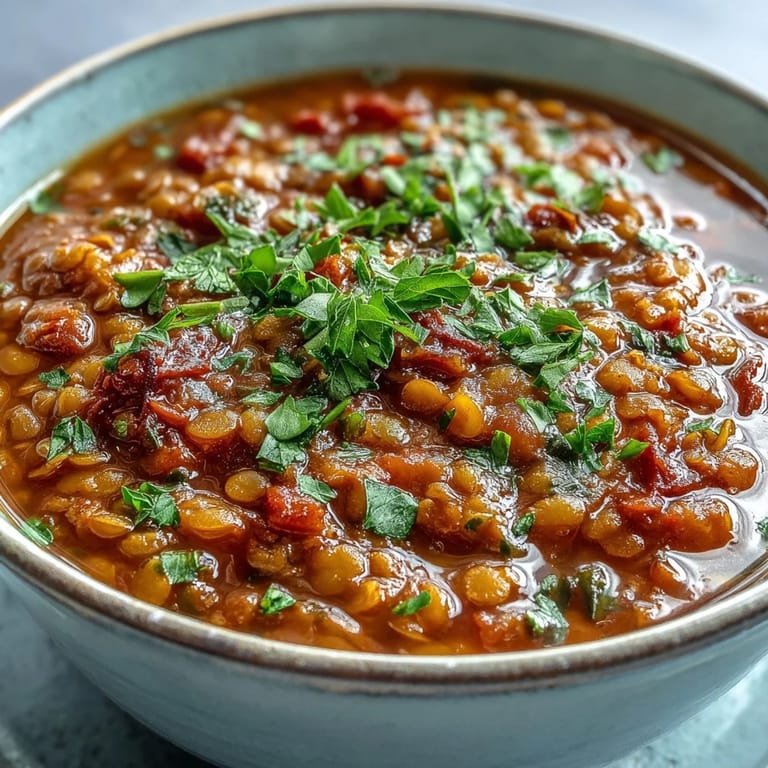
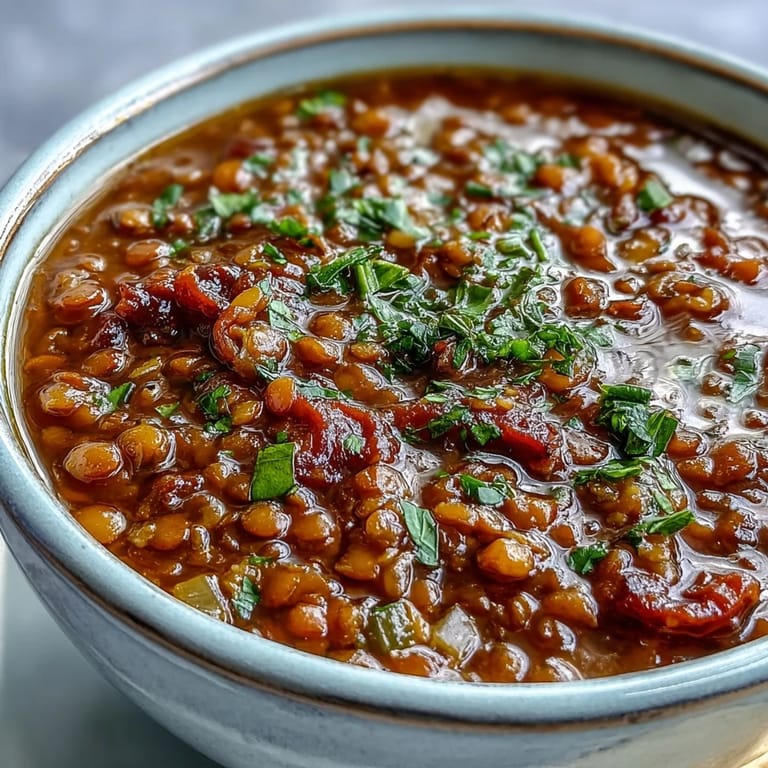
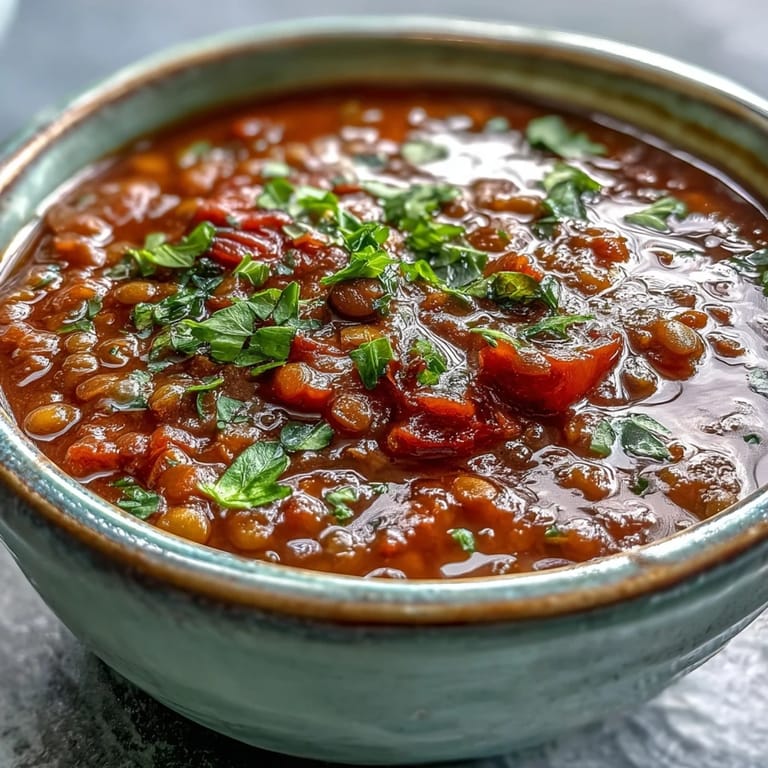
- Ladle the soup into bowls and top with a small handful of fresh parsley if you have it. Watch how the bright green sits on top of the deep red-orange broth.
 Save Pin
 I learned something odd but real about this soup when I made a big batch for a friend who was overwhelmed by a new job—she told me later that having something warm and nourishing waiting in her refrigerator made mornings feel less chaotic. Food isn't always about the moment you're eating it; sometimes it's about the care that went into the making, waiting there for when you need it most.
Texture Matters
The beauty of this soup is that you can adjust its texture based on your mood. Some nights I like it just as is, with distinct lentils and vegetables suspended in the broth—it feels hearty and whole that way. Other times, especially when I'm craving comfort, I use an immersion blender to make it partially smooth, keeping some texture but creating a more velvety base that coats your mouth warmly. I've never blended the whole thing completely, but I imagine it would be like tomato bisque with a protein boost.
Variations Worth Trying
Once you've made this soup a few times, you'll start to see where you can play around. Red lentils cook faster and create a softer, almost creamy texture—reduce the simmering time to 20 minutes if you go that route. I've added spinach near the end, and I've stirred in a can of coconut milk for a creamier version that feels almost luxurious. One time I added roasted red peppers from a jar, and it gave the soup an unexpected richness that completely changed the vibe without requiring extra work.
Serving and Storage Wisdom
This soup actually tastes better the next day or even three days later—the flavors deepen and become more integrated, so don't hesitate to make a double batch and keep it on hand. It freezes well too, though I find I make it often enough that it rarely makes it to the freezer. Serve it with crusty bread for dipping, or if you want something creamier, a dollop of non-dairy yogurt stirred in at the end adds a cooling contrast to the warm spices.
- Store leftovers in an airtight container in the refrigerator for up to 4 days, or freeze for up to 3 months.
- Reheat gently on the stovetop over low heat, adding a splash of extra broth if it's thickened too much while sitting.
- This is the kind of soup you can customize based on what vegetables you have on hand or what you're craving that day.
 Save Pin
 This soup has become my default when I want to feel like I'm taking care of someone, including myself. It's honest food that doesn't pretend to be anything other than what it is—nourishing, warm, and genuinely good.
Recipe Questions & Answers
- → Can I use red lentils instead of brown or green?
Yes, red lentils work well and cook faster. Reduce the simmering time by about 10 minutes, as they soften more quickly and create a naturally creamier texture.
- → How do I make this soup creamier?
Use an immersion blender to partially or fully blend the soup after cooking. Alternatively, transfer half the soup to a blender, purée it, then return it to the pot for a smoother consistency.
- → Can I freeze tomato lentil soup?
Absolutely. Let it cool completely, then store in airtight containers for up to 3 months. Thaw overnight in the fridge and reheat gently on the stovetop, adding a splash of broth if needed.
- → What can I serve with this soup?
Crusty bread, warm pita, or a fresh green salad complement this soup perfectly. A dollop of non-dairy yogurt or a drizzle of olive oil adds richness and extra flavor.
- → How long does this soup keep in the fridge?
Store in an airtight container for up to 5 days. The flavors deepen over time, making leftovers even more delicious. Reheat gently and add a squeeze of fresh lemon juice before serving.
- → Can I add other vegetables to this soup?
Yes, spinach, kale, zucchini, or bell peppers work wonderfully. Add leafy greens in the last 5 minutes of cooking, or dice heartier vegetables and sauté them with the onions and carrots.